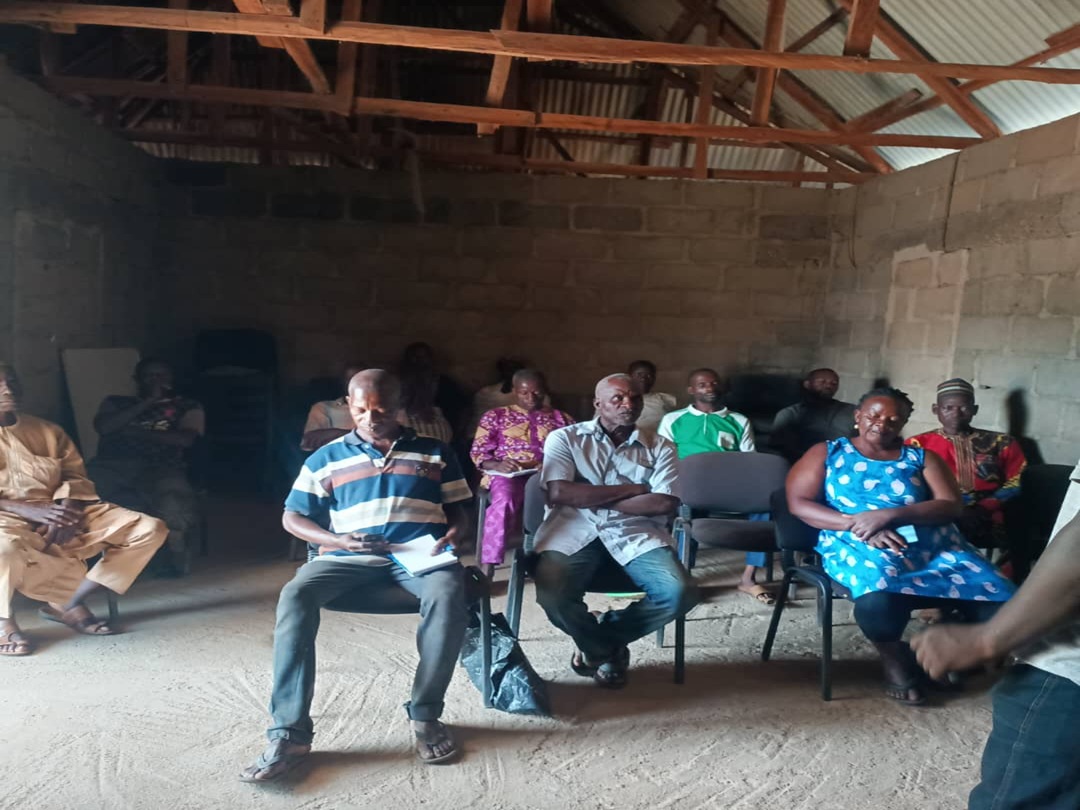
Training of Kufana Farmers on
Climate
Smart Agriculture
Facilitated by Nomangwani, Alhamdu S. Kato, Judith A. Thomas, and
Jerry J. Banas
In a proactive step toward sustainable agriculture and climate resilience, Nomangwani
facilitators Alhamdu S. Kato, Judith A. Thomas, and Jerry J.
Banas, organized a transformative training session on Climate Smart Agriculture
(CSA) for farmers in kufana, a rural community located in Kaduna South, Kaduna State.
🎯 Purpose of the Training
The training aimed to:
- Equip local farmers with adaptive strategies to mitigate the effects of climate change
- Promote sustainable agricultural practices that enhance productivity and environmental
stewardship
- Strengthen food security and improve livelihoods in the Kufana community
📘 Training Highlights
The program featured a blend of theoretical sessions and practical demonstrations, covering:
- Climate Change Awareness Understanding its causes, local impacts, and the urgency
for
adaptation
- CSA Techniques: Including crop diversification, conservation agriculture,
agroforestry, and
organic soil management
- Water and Soil Conservation: Efficient irrigation, mulching, and composting methods
- Community Engagement: Encouraging farmer-to-farmer knowledge sharing and cooperative
action
👥 Role of the Facilitators
The training was led by a dedicated team of experts:
- Alhamdu S. Kato: Provided insights on climate adaptation strategies and soil health
- Judith A. Thomas: Led sessions on sustainable crop management and gender-inclusive
farming
practices
- Jerry J. Banas: Coordinated field demonstrations and facilitated group discussions
to
reinforce learning
🌍 Impact and Way Forward
The training empowered Kufana farmers with actionable knowledge to improve their resilience against
climate shocks. Many participants expressed renewed confidence in their ability to sustain their
farms despite environmental challenges. The initiative also laid the groundwork for ongoing
mentorship and the formation of local CSA champions within the community.
This effort aligns with Nigeria’s broader goals under the
National Adaptation Plan and the
Sustainable Development Goals (SDGs), particularly
Goal 2 (Zero Hunger) and
Goal 13
(Climate Action)